
Table of Contents
- 7 Pool Landscaping Ideas for Dallas Backyards
- 1. Native Texas Plants for Drought-Tolerant Pool Landscaping
- 2. Hardscaping Materials That Transform Pool Surrounds
- 3. Artificial Turf and Low-Maintenance Ground Covers
- 4. Shade Structures and Pergolas for Poolside Comfort
- 5. Water Features and Ambient Lighting Design
- Understanding Residential Pool Permit Requirements
- Choosing the Right Pool Builders for Your Dallas Project
- Frequently Asked Questions
Last Updated: September 30, 2026
7 Pool Landscaping Ideas for Dallas Backyards
Creating a stunning backyard oasis in North Texas requires more than just installing a pool. The right pool landscaping ideas transform your outdoor space into a resort-like retreat that complements your home’s architecture, handles the region’s challenging climate, and maximizes your investment’s appeal and functionality. At Swim Clean Pool, we’ve learned that the best designs balance beauty, durability, and practicality for the Dallas environment.
This guide covers the most effective pool landscaping ideas for homeowners in the Dallas-Fort Worth area, from native plant selections that thrive in our clay-heavy soil to hardscaping materials that withstand intense summer heat. Whether you’re building a new pool or renovating an existing one, these strategies will help you create an outdoor living space your family will enjoy for decades.
| Strategy | Best For | Key Benefit |
|---|---|---|
| Native Texas plants | Natural aesthetics and low maintenance | Drought-tolerant, adapted to local soil |
| Hardscaping materials | Durability and heat resistance | Withstands intense sun and clay soil issues |
| Artificial turf | Minimal upkeep around pool deck | No mud, no debris, year-round usability |
| Shade structures | Comfort and UV protection | Creates outdoor living zones |
| Water features and lighting | Ambiance and nighttime use | Extends entertainment hours |
1. Native Texas Plants for Drought-Tolerant Pool Landscaping
Native Texas plants are your foundation for a pool landscaping design that actually thrives in North Texas conditions. These species evolved in our clay soil, intense summer heat, and irregular rainfall patterns, which means they require far less maintenance and water than ornamental imports that struggle in our climate.
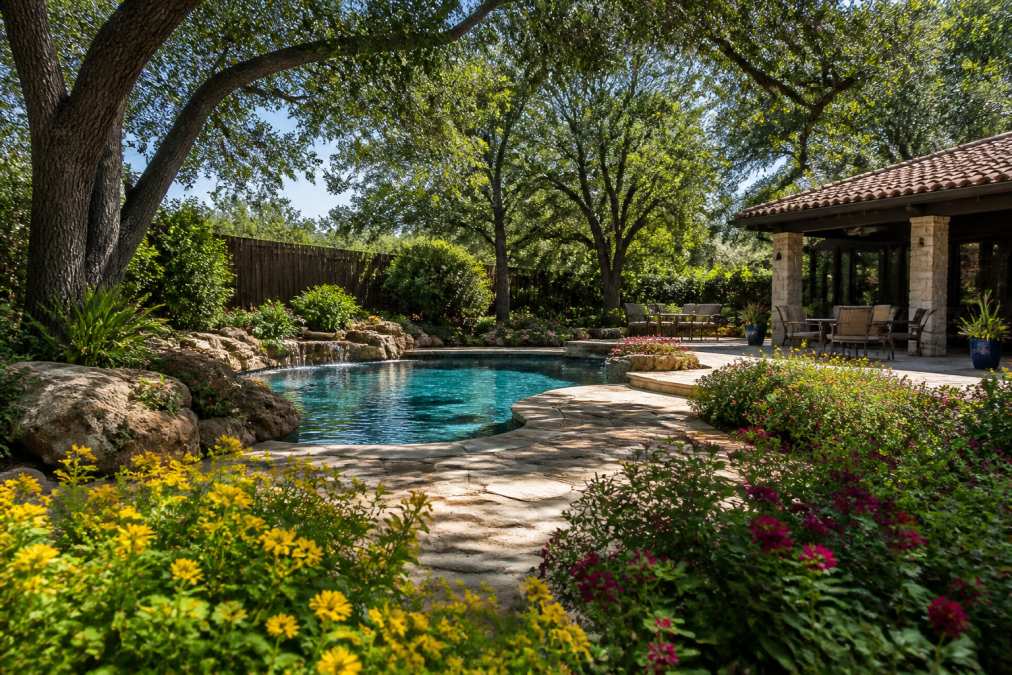
Esperanza (Tecoma stans) is a top choice for pool surrounds. This woody shrub produces bright yellow trumpet flowers throughout summer and grows to 8-10 feet, creating natural screening and shade without requiring constant trimming. It handles our clay soil exceptionally well and thrives in full sun, ideal for the intense Dallas heat reflected off pool water. Lantana is another powerhouse. Its dense, colorful flower clusters attract butterflies and hummingbirds, and it tolerates poor soil conditions that defeat most ornamentals. Plant it in drifts along pool edges to soften hardscaping and create visual interest.
For groundcover, native grasses like Gulf muhly and Lindheimer muhly provide texture and movement without the mowing headaches of traditional lawn. They’re particularly useful in transition zones between your pool deck and surrounding landscape. Agarito, a native shrub, offers fragrant flowers in spring and silvery foliage year-round, plus it handles the reflected heat from pool decks without scorching.
When selecting native plants for pool landscaping, position them to frame views INTO the pool rather than obstruct them. Tall plants work best along property lines; lower varieties near the water’s edge maintain sightlines and safety.
The real advantage of native species becomes clear during drought years. While imported ornamentals wilt and require supplemental irrigation, native plants survive on rainfall alone once established. This reduces your water bill and maintenance burden while creating a landscape that looks intentional and cohesive with the regional character.
2. Hardscaping Materials That Transform Pool Surrounds
Hardscaping, the non-plant elements of your landscape, defines the usability and longevity of your pool area. In Dallas, material selection matters enormously because intense sun exposure, reflected heat, and our challenging clay soil all accelerate wear on inferior materials.
Flagstone patios are the gold standard for pool decks in this region. Natural flagstone provides excellent slip resistance when wet, stays cooler underfoot than concrete in summer heat, and develops a beautiful weathered patina over time. According to landscape design standards from the American Society of Landscape Architects, flagstone’s thermal properties make it superior to solid concrete for poolside applications in high-heat climates. Installation typically involves setting stones in a mortar bed over compacted base material, critical in Dallas because our expansive clay soil shifts seasonally, and a proper base prevents cracking.
Decomposed granite offers a more budget-conscious alternative for pathways and surrounding areas. It compacts firmly, provides excellent drainage (crucial in clay-soil regions where water pooling causes problems), and creates a rustic aesthetic that complements native plantings. The material does require occasional raking and top-dressing every few years, but the cost-to-durability ratio appeals to many homeowners.
For pool deck edges, consider pavers made from permeable materials. These allow water drainage instead of creating pooling issues, which is essential in North Texas where heavy summer rains can overwhelm traditional drainage. Permeable pavers also reduce heat island effect, important when you’re standing barefoot on deck in 100-degree heat.
Avoid standard concrete for pool decks in Dallas. While cheaper initially, concrete cracks under our clay soil’s seasonal expansion and contraction, and it becomes dangerously hot underfoot in summer. Repairs compound costs within 5-7 years.
Retaining walls and raised planter beds constructed from natural stone or composite materials add dimension to your pool area while managing drainage and soil stability. Stone walls also create visual boundaries that make smaller yards feel more designed and intentional.
3. Artificial Turf and Low-Maintenance Ground Covers
Artificial turf has evolved dramatically in recent years, and it’s become a practical solution for pool surrounds where traditional grass creates constant problems. Grass clippings blow into pools, mud accumulates around deck edges after rain, and the constant moisture from splashing kills most turf species.
Modern synthetic grass designed for pool areas offers high drainage capacity, water passes through the backing and drains away rather than pooling. This prevents the soggy, muddy conditions that plague natural lawns in pool zones. The turf also eliminates the need for mowing, fertilizing, or pest management, which reduces your maintenance workload significantly.
Many homeowners pair artificial turf with hardscaping elements, for example, a flagstone patio immediately around the pool deck with artificial turf in surrounding recreation areas.
Families with pets or young children who want a mud-free, debris-free surface year-round without the maintenance burden of natural grass.
The primary consideration with artificial turf is upfront cost and the long-term durability question. Quality installations last 12-15 years before needing replacement, and the environmental impact of synthetic materials is a valid concern for some homeowners. However, when compared to the water consumption and chemical inputs required to maintain natural grass in Dallas’s climate, artificial turf often wins the sustainability argument.
4. Shade Structures and Pergolas for Poolside Comfort
Dallas summers are intense, and shade structures transform your pool area from a midday heat refuge into a comfortable outdoor living space that’s usable throughout the day. Shade structures also reduce water temperature fluctuations and evaporation, which helps manage chemical balance and operating costs.
Pergolas are the most popular choice for pool landscaping in North Texas.
5. Water Features and Ambient Lighting Design
Water features, fountains, spillways, and cascades, add movement, sound, and visual interest to your pool landscaping while creating a resort-like atmosphere. A simple spillway waterfall from an elevated planter into the pool creates a focal point and the soothing sound of running water, which masks neighborhood noise and enhances the sense of retreat.
Understanding Residential Pool Permit Requirements
Before breaking ground on any pool project, you’ll need to navigate permit requirements. In most North Texas municipalities, residential pool construction requires permits from your city or county, and inspections occur at multiple stages: after excavation, after plumbing and electrical rough-in, and after final construction.
Skipping permits to save money creates liability exposure, makes future home sales complicated, and may result in costly corrections if discovered during inspection. Permits exist to protect your investment and your neighbors’ properties.
Choosing the Right Pool Builders for Your Dallas Project
Your pool landscaping ideas are only as good as the builder executing them. The wrong contractor can misinterpret your vision, cut corners on materials, or create drainage and structural problems that plague you for years.
- Local expertise: A builder familiar with North Texas clay soil, seasonal weather patterns, and municipal codes will anticipate problems and design solutions proactively. Builders from other regions often miss the specific challenges of our market.
- Full-service capability: The best builders manage design, permitting, construction, and landscaping integration as one cohesive process rather than coordinating multiple contractors. This reduces miscommunication and ensures your vision stays intact.
- Equipment knowledge: Pool functionality depends on proper equipment selection and installation. A builder with deep expertise in pumps, filters, heaters, and automation systems will design for efficiency and reliability, not just lowest cost.
- Transparent communication: Before hiring, ask how the builder handles budget questions, change orders, and timeline delays. You want clear answers about costs and processes, not surprise invoices halfway through.
Frequently Asked Questions
What are the main residential pool permit requirements in Dallas?
Dallas requires permits for any inground pool construction. You’ll need to submit detailed plans showing pool dimensions, depth, setback distances from property lines, and drainage systems. The city also requires inspections at multiple stages: after excavation, after plumbing and electrical rough-in, and final inspection before filling. Most homeowners work with their pool builders to handle permit applications, as the process involves building code compliance and site-specific engineering, especially on clay soil common in North Texas.
Which drought-tolerant plants work best around pools in this climate?
Native Texas plants thrive in pool landscaping while reducing water waste. Esperanza, lantana, flame acanthus, and Texas privet handle heat and humidity well. Ornamental grasses like autumn sage add texture without requiring constant maintenance. Avoid plants with seeds or berries that drop into the pool. Position trees strategically for shade without creating excessive debris. These choices complement xeriscaping principles while maintaining the lush, inviting feel homeowners want in their outdoor living spaces.
How do I find reliable pool builders in the Dallas area?
Look for pool builders with documented experience in custom design, local soil expertise, and full-service capabilities including equipment installation and maintenance. Check references for completed projects in your neighborhood or similar clay soil conditions. Ask about their approach to permitting, project timelines, and how they handle changes mid-project. Reputable builders offer transparent communication about costs upfront and stand behind their work with warranties on construction and equipment.
What hardscaping materials work best for pool decks in Dallas?
Flagstone, travertine, and decorative concrete are popular choices that handle the heat and humidity well. Decomposed granite provides a natural, budget-friendly option for pathways. Each material has different maintenance needs and heat retention properties. Travertine stays cooler underfoot than standard concrete. Consider slip resistance, drainage, and how materials complement your home’s architecture when selecting hardscape materials for your pool surround.

