
Table of Contents
- Inground vs Above Ground Pool Cost: A Head-to-Head Comparison
- Average Cost of Inground Pool Installation
- Above Ground Pool Costs and What Drives Them
- Inground Pool Construction Timeline
- Long-Term Maintenance and Operating Expenses
- Backyard Pool Landscaping Costs
- Resale Value, Insurance, and Tax Implications
- Conclusion
- Frequently Asked Questions
Last Updated: September 13, 2026
Inground vs Above Ground Pool Cost: A Head-to-Head Comparison
The inground pool vs above ground pool cost gap is wider than most homeowners expect, and it shows up long before the first shovel hits the dirt. Inground pools are permanent structures built into the ground with concrete, fiberglass, or vinyl, while above ground pools sit on a prepared pad and rely on a steel or resin frame for structural integrity. That single difference in construction drives nearly every cost you’ll face over the next decade. This guide breaks down what each option actually costs to build, run, and maintain so you can budget with real numbers instead of guesswork.
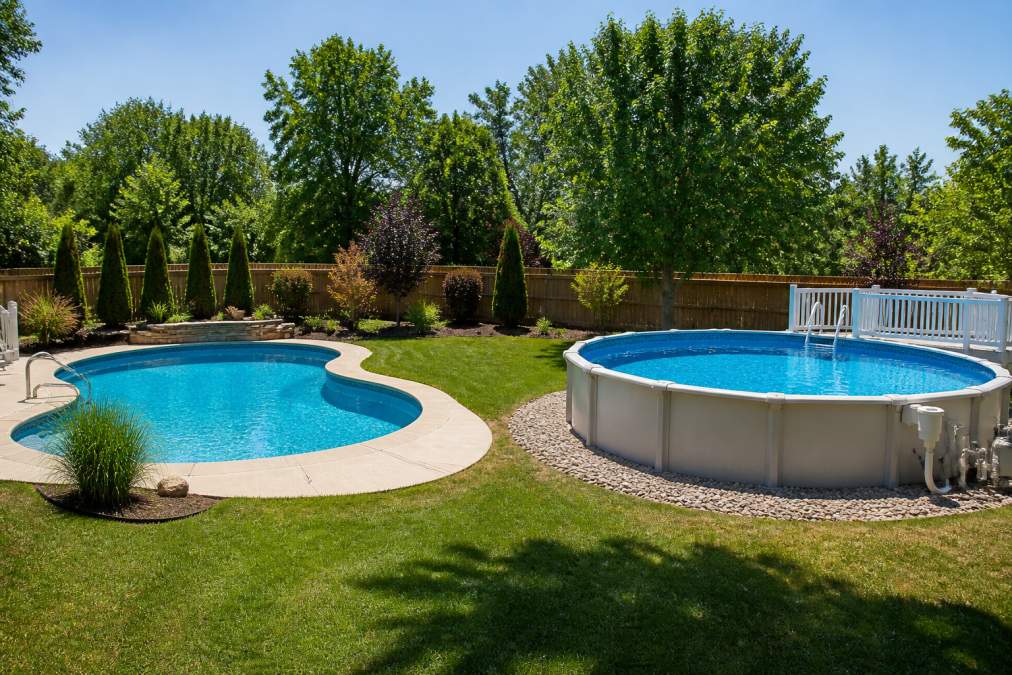
Here’s the uncomfortable truth most cost guides skip: the purchase price is only the entry fee. Excavation, decking, permits, chemical balancing, and winterization all land on the ledger eventually. Below, we’ll walk through every line item so you know which pool fits your budget and your backyard.
| Factor | Inground Pool | Above Ground Pool |
|---|---|---|
| Upfront cost | High | Low |
| Installation time | Weeks to months | Days |
| Lifespan | Decades | 10-20 years |
| Resale value impact | Positive | Minimal |
| Maintenance effort | Moderate | Moderate |
| Customization | Full | Limited |
Average Cost of Inground Pool Installation
Inground pool installation is the most expensive route, and pricing depends on size, material, site access, and how much decking or landscaping you add around it. Concrete pools sit at the top of the range because of excavation, steel reinforcement, and finishing work. Fiberglass shells cost less to install but require a crane and precise site preparation. Vinyl liner pools land in the middle, though the liner itself needs replacing periodically.
The biggest driver is site preparation. Excavation and backfilling on tight lots or sloped yards adds labor and equipment time. Utility relocation, drainage corrections, and soil conditions can shift the total significantly. Because every yard is different, Angi’s pool installation cost guide recommends getting itemized quotes rather than ballpark figures.
The most common budget mistake is underestimating site preparation. A yard with mature trees, rock, or poor drainage can add weeks of excavation work that no initial estimate captures.
Above Ground Pool Costs and What Drives Them
Above ground pool costs are far lower because there’s no excavation, no concrete shell, and no permanent decking requirement. The main expenses are the pool kit itself, a level pool pad, and the filtration system. Installation can be a DIY project for smaller models or a professional job for larger semi-inground setups.
What pushes the price up: pool size, wall height, resin versus steel framing, and whether you add a heater or upgraded pump. Semi-inground and on-ground pools cost more than standard above ground models because they require partial digging and retaining support. Winterization and seasonal setup also add recurring costs that inground owners don’t face.
If you’re comparing quotes, ask whether the price includes the pool pad, ground leveling, and equipment hookup. Those three items are the most common add-ons that inflate a “cheap” above ground pool quote.
Inground Pool Construction Timeline
The inground pool construction timeline typically runs several weeks to a few months from contract to swim-ready, depending on design complexity and permitting. A straightforward fiberglass install moves fastest. Custom concrete pools with spas, water features, and integrated decking take the longest because each phase depends on the previous one curing or passing inspection.
A typical sequence looks like this:
- Design and permitting
- Excavation and site preparation
- Structural shell or panel installation
- Plumbing and electrical rough-in
- Decking, coping, and landscaping
- Equipment startup and chemical balancing
Weather, inspection scheduling, and material lead times all affect the schedule. A full-service design-build partner manages these phases so you’re not coordinating separate contractors for each step.
Long-Term Maintenance and Operating Expenses
Long-term maintenance is where the two pool types converge more than buyers expect, and where the 10-year total cost of ownership (TCO) story actually lives. Both require chemical balancing, filtration care, and seasonal attention, but the equipment load, component lifespans, and replacement cycles diverge sharply. Most cost guides stop at the sticker price; the real comparison is what each pool drains from your budget between year one and year ten.
Here is how the recurring line items stack up side by side:
| Recurring Cost | Inground Pool | Above Ground Pool |
|---|---|---|
| Chemicals and testing | Higher volume due to larger water body | Lower volume, smaller gallonage |
| Pump and filter | Larger equipment, higher replacement cost | Smaller equipment, shorter lifespan |
| Heater operation | Higher gas or electric draw | Lower draw, often seasonal only |
| Winterization and startup | Professional closing common | Often DIY-able |
| Surface or liner repair | Resurfacing or liner replacement every 5-12 years depending on material | Full liner replacement every 5-9 years typical |
| Structural repairs | Rare but expensive (shell, plumbing, decking) | More frequent (walls, frame, top rails) |
The 10-year TCO math. A common pattern practitioners see: an above ground pool’s lower upfront price is partly offset by shorter equipment life and full liner replacement cycles, while an inground pool’s higher upfront price is spread across a longer service life with fewer full-system replacements. Add utilities, chemicals, and one major repair event per pool over a decade, and the gap between the two narrows considerably, sometimes to the point where the above ground pool’s savings look smaller than the sticker suggested.
Where the money actually goes:
- Chemicals and testing supplies, the most predictable recurring cost, scaling with water volume
- Pump and filter maintenance or replacement, the largest single equipment line over 10 years
- Pool heater operation, if equipped, highly variable by climate and usage
- Winterization and spring startup, recurring seasonal labor or DIY time
- Repairs to liners, surfaces, or framing, the wildcard that most budgets miss
Pump efficiency matters more than most homeowners realize. A variable-speed pump can cut energy use substantially compared to a single-speed unit, which is why the U.S. Department of Energy’s pool pump guidance points to efficient equipment as a key operating-cost lever. Over a 10-year horizon, that single upgrade can shift the TCO comparison more than any other equipment decision.
When comparing quotes, ask each installer for a 10-year TCO estimate, not just an install price. The pool with the lower sticker is not always the pool with the lower decade.
Backyard Pool Landscaping Costs
Backyard pool landscaping costs vary widely and often rival the pool itself in total spend. Decking, coping, retaining walls, lighting, and plantings all add up, and the more custom the design, the higher the number. Inground pools usually need surrounding hardscape to look finished, while above ground pools can get by with a simple deck or gravel border.
Common landscaping line items include:
- Pool decking in concrete, pavers, or stone
- Safety fencing required by local codes
- Landscape lighting and irrigation adjustments
- Outdoor kitchens or entertainment areas
- Planting and drainage corrections
For homeowners in the Dallas-Fort Worth area, clay soil and summer heat influence both plant selection and how much structural support decking needs. A design-build team can integrate landscaping with the pool build so you’re not paying twice for the same excavation and grading work.
Resale Value, Insurance, and Tax Implications
Resale value, insurance, and taxes are the three financial angles most cost comparisons skip entirely, and they are where the inground vs above ground pool cost decision gets genuinely interesting. None of the top-ranking guides dig into how these hidden costs interact with the 10-year TCO, so this is where the comparison earns its keep.
Resale value. An inground pool can raise property appraisal values in markets where pools are expected, but it rarely returns its full installation cost at sale. Above ground pools contribute little to resale and are sometimes removed before a home sale because buyers view them as temporary. The practical takeaway: treat an inground pool as a lifestyle investment with partial cost recovery, and an above ground pool as a consumption purchase with near-zero resale contribution.
Insurance. Both pool types usually require added liability coverage and safety fencing, and many insurers will not write a policy without a compliant barrier (Pool safety and insurance). The structural distinction matters: some insurers treat inground pools as permanent structures (covered under dwelling coverage) and above ground pools as personal property (covered under contents or a separate rider), which changes deductibles, claim handling, and whether the pool is covered at all after a storm or freeze event. Ask your carrier specifically how each type is classified before you buy, the answer varies by state and by insurer.
Taxes. Property tax treatment varies by jurisdiction. In some assessment areas, an inground pool is a permanent improvement that raises assessed value; in others, above ground pools are excluded as personal property. Do not assume a deduction or exclusion, check your local assessor’s rules, because the difference can be hundreds of dollars per year in assessed value.
Regional climate impact on durability and ROI. This is the factor almost no cost guide addresses. In freeze-thaw climates, above ground pools face wall and liner stress from ice expansion, shortening component life and raising the 10-year TCO. In extreme-heat markets, inground pools see higher evaporation and chemical demand, while above ground pools face faster UV degradation of liners and resin components. The same pool can have a very different 10-year cost profile depending on where it sits, which is why a national average cost range is a starting point, not an answer.
Site-specific feasibility. Before either pool is even priced, the yard has to qualify. Soil type (expansive clay versus sandy loam), slope, and water table depth all determine whether an inground pool is feasible without engineered retaining structures or dewatering during excavation. Above ground pools need a level, compacted pad, and on a sloped lot, that pad itself becomes a significant cost. A site evaluation before quoting is the single best way to avoid a budget surprise.
The hidden financial costs, insurance reclassification, assessed value changes, and climate-driven durability differences, can swing the 10-year TCO by more than the difference in installation price. Budget for them explicitly.
The 10-year total cost of ownership is the fairest comparison. Add upfront cost, maintenance, equipment replacement, utilities, insurance, and any tax or assessment impact across a decade, and the inground pool vs above ground pool cost gap narrows more than the sticker prices suggest.
Conclusion
Choosing between an inground and above ground pool comes down to how long you plan to stay, how you’ll use the space, and what you can sustain financially over a decade, not just on installation day. The upfront savings of an above ground pool are real, but so are the durability, customization, and resale advantages of an inground build.
If you’re ready to explore a custom inground pool designed for your property, Swim Clean Pool offers a 100% custom design process, full-service design-build project management, and expertise in equipment selection and remodeling. Our owner personally manages each project from consultation through construction, so you get professional guidance at every stage. Request a consultation with Swim Clean Pool and start planning a backyard built to last.
Frequently Asked Questions
Is it cheaper to build an above ground or inground pool?
Above ground pools almost always cost less upfront. However, above ground pools have shorter lifespans (10-15 years) and may not add resale value. Inground pools can increase home equity, so the long-term picture differs.
Can I get an inground pool for $30,000?
In most markets, $30,000 is below the typical starting point for a professionally installed inground pool. Site conditions, permits, and decking add costs. For an accurate budget, request a consultation with a local builder who can assess your yard.
What hidden costs should I budget for when installing a custom inground pool?
Beyond the base pool price, budget for permits, site excavation, utility relocation, decking, fencing, and landscaping. Ongoing costs include chemicals, electricity for pumps and heaters, and occasional repairs. Ask your builder for a detailed line-item estimate to avoid surprises.
Does an inground pool add more value to a property than an above ground pool?
Inground pools generally contribute more to resale value because they are considered a permanent improvement. Appraisers may factor them into property value, though the return on investment varies by market. Above ground pools are often seen as temporary and may not increase appraised value. In high-demand areas, a well-designed inground pool can recoup a significant portion of its cost.

